


Designing Luxury Pools: A Guide to Granite, Quartzite, Basalt, and Sintered Stone
Mr. Afraz
There is a moment, just before you step into a beautifully designed pool, when the material beneath your feet and lining the water tells you everything about the quality of the space. It is subtle, but it is unmistakable.
The right finish does not just look good; it sets a mood, signals a standard, and transforms an ordinary swimming pool into something that feels truly considered. Especially in the UAE, where climate, light, and luxury living shape every design decision, architects are increasingly turning to specialist marble suppliers in the UAE and high end natural stone suppliers to source materials that can perform as beautifully as they look.
What Makes a Stone Right for Pools?
LOW WATER ABSORPTION
The less porous a stone, the better it resists moisture, chemical penetration, and algae build up. Stones with high absorption rates require more frequent sealing and deteriorate faster in pool environments.
CHEMICAL RESISTANCE
Pool water is treated with chlorine, salt, or other chemicals. Some stones, particularly softer marbles and certain limestones, can react to these and show etching or staining over time. The best pool stones are effectively inert.
UV RESISTANCE
In the UAE, a stone that fades or bleaches under direct sunlight is a real problem. Dense natural stones and engineered sintered surfaces retain their color and integrity even under extreme UV exposure.
SURFACE FINISH
For pool surrounds, coping, and deck areas, a flamed, brushed, or honed finish dramatically improves grip when wet. In high end natural stone installation, this safety consideration is as important as aesthetics.
Why Natural Stone and Sintered Stone Work Best?
Natural stone and sintered stone sit within the same material philosophy of using nature as the foundation and refining it for performance. Natural stone brings depth, variation, and a sense of material honesty that cannot be replicated. Sintered stone takes natural minerals and reconstitutes them under extreme heat and pressure to create a surface that is even stronger, more consistent, and highly resilient, which is particularly important in the extreme climate conditions of the region.
MATERIALS
Granite
PROVEN · DURABLE · ELEGANT
Granite is one of the best performing natural stones for pool applications. Its density and extremely low water absorption make it highly resistant to moisture and pool chemicals. It performs exceptionally well in the UAE climate, retaining both color and structure over decades without fading or requiring intensive maintenance.
For high traffic areas such as pool decks and coping, flamed or bush hammered finishes provide slip resistance without compromising visual depth. This makes granite a consistent choice for architects specifying natural stone installation in high use luxury environments.
Case Study: Al Qasr Hotel, Madinat Jumeirah, Dubai
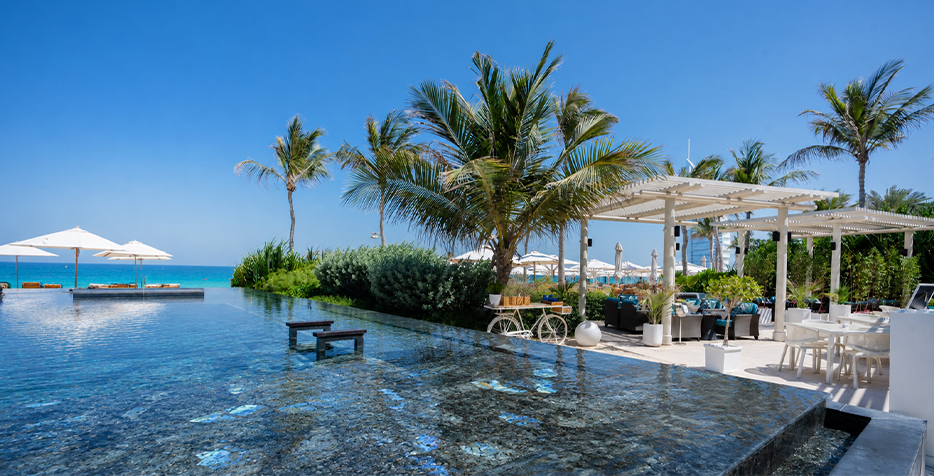
Lemurian Blue granite was used in key pool and water adjacent areas, where its deep blue grey tones shift beautifully under changing light. When submerged, the stone takes on a layered iridescence that enhances the sense of depth in the water. The honed finish softens reflections and improves grip, supporting both performance and atmosphere in one of Dubai’s most recognisable resort environments.
Beyond Lemurian Blue, GLAZE supplies a curated range of granite options frequently used in luxury stone UAE projects, particularly in hospitality and high end residential developments where durability is essential.
Quartzite
THE DESIGNER’S RISING FAVOURITE
If granite is the established classic, quartzite is the material designers increasingly specify when they want both visual drama and technical performance. Harder than marble and highly resistant to weathering, quartzite performs exceptionally well in pool environments where chemical exposure and temperature shifts are constant.
Its crystalline structure provides natural grip underfoot, making it ideal for wet areas where safety is critical. Unlike marble, quartzite does not etch when exposed to pool chemicals, making it a strong candidate for both pool linings and coping.
Azul Macaubas remains one of the most requested quartzites for luxury pools, with flowing blue grey movement that echoes water itself. Blue Belize deepens into richer cobalt tones when wet, while Copacabana offers a lighter, more architectural palette suited to infinity edge designs.
Case Study: Therme Vals, Switzerland
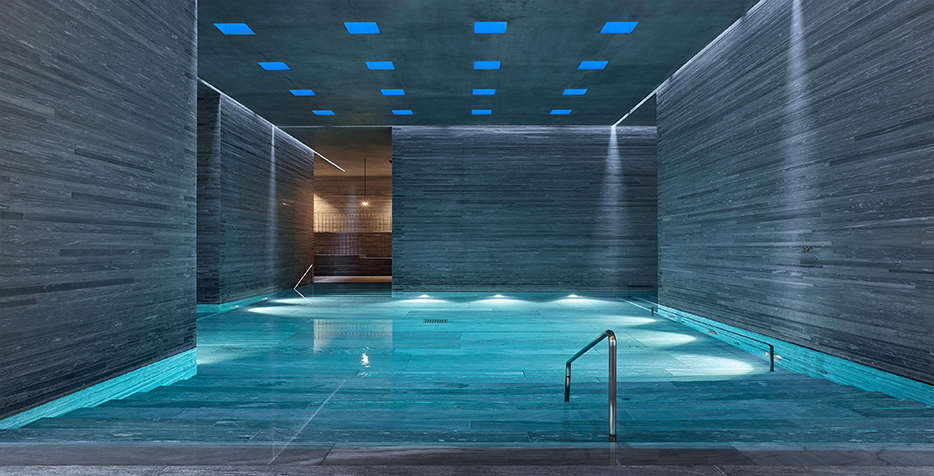
Designed by Peter Zumthor, Therme Vals is one of the most studied examples of quartzite in architecture. Locally sourced Vals quartzite was used across the entire bathing complex, including pools, walls, and floors. The stone becomes part of the architecture itself, forming a continuous monolithic surface where water appears to emerge from the stone rather than sit on top of it. The experience is intentionally minimal, focusing on material, light, and silence.
Basalt
UNDERSTATED · ELEGANT · EFFORTLESS
Basalt is a material that does not announce itself; it simply feels right. This volcanic stone, dense and fine grained, has become synonymous with restrained luxury in resort architecture across the Middle East, Southeast Asia, and the Mediterranean.
Its extremely low water absorption makes it resistant to algae growth and chemical penetration. When finished correctly, basalt also maintains a naturally cool surface temperature even in direct UAE sunlight, which is a significant advantage in outdoor pool design.
Basalt Black is widely used in contemporary pool environments for its uniform tone and minimal visual noise, while Basalt Pietra Lavica offers a softer, more textured character that blends naturally into landscape driven design schemes.
Case Study: Aman Resort
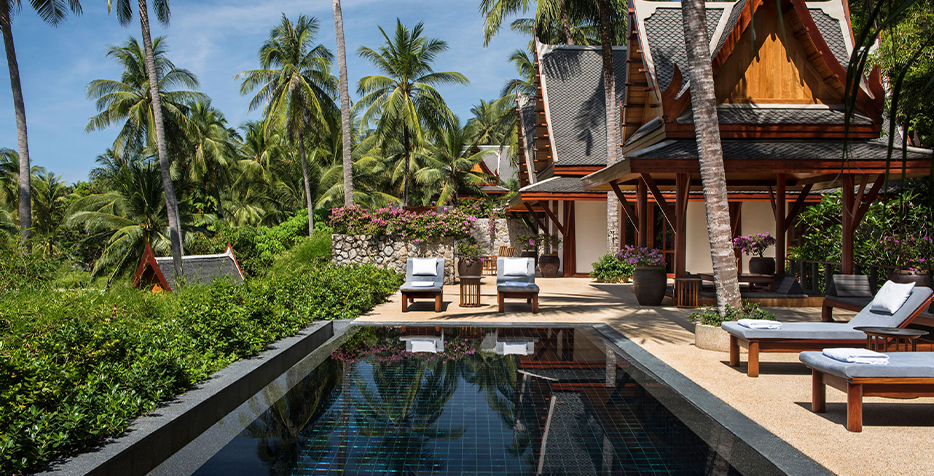
Basalt is used to create a calm and continuous relationship between architecture and water. In these projects, stone is not treated as decoration but as landscape. Pools are designed as quiet reflective surfaces framed by basalt, where material consistency creates a sense of stillness and privacy that defines the brand’s architectural identity.
Sintered Stone
ENGINEERED FOR PERFORMANCE
Not every luxury pool project requires natural stone. When the brief calls for flawless consistency, large seamless surfaces, and minimal maintenance, sintered stone becomes a highly effective solution.
Brands such as Neolith and XTONE produce large format surfaces with near zero porosity, high UV stability, and strong resistance to staining and pool chemicals. Because it is manufactured from natural minerals that are reconstituted under extreme heat and pressure, it delivers a level of consistency and strength that is particularly suited to demanding outdoor environments.
In modern pool design, sintered stone is often used where precision, uniformity, and long term durability are the priority.
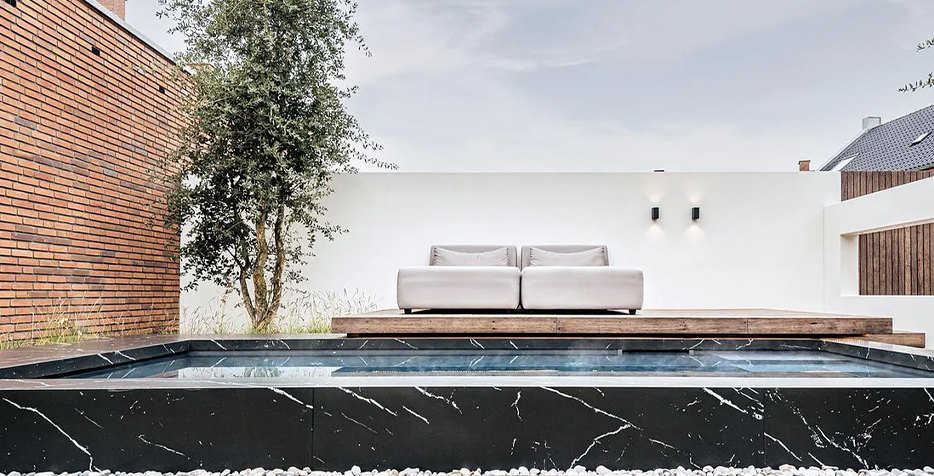
Case Study: Belah House (Bila House), Australia
At Belah House (Bila House), Neolith sintered stone was used across pool terraces and surrounding decks to create a continuous architectural surface. The large format slabs reduce joint lines, allowing water, horizon, and architecture to feel visually connected. The material’s stability in coastal conditions ensures long term performance with minimal maintenance.
The right material does not just finish a pool, it defines the entire character of the space around it.